How to stay warm in a teardrop camper
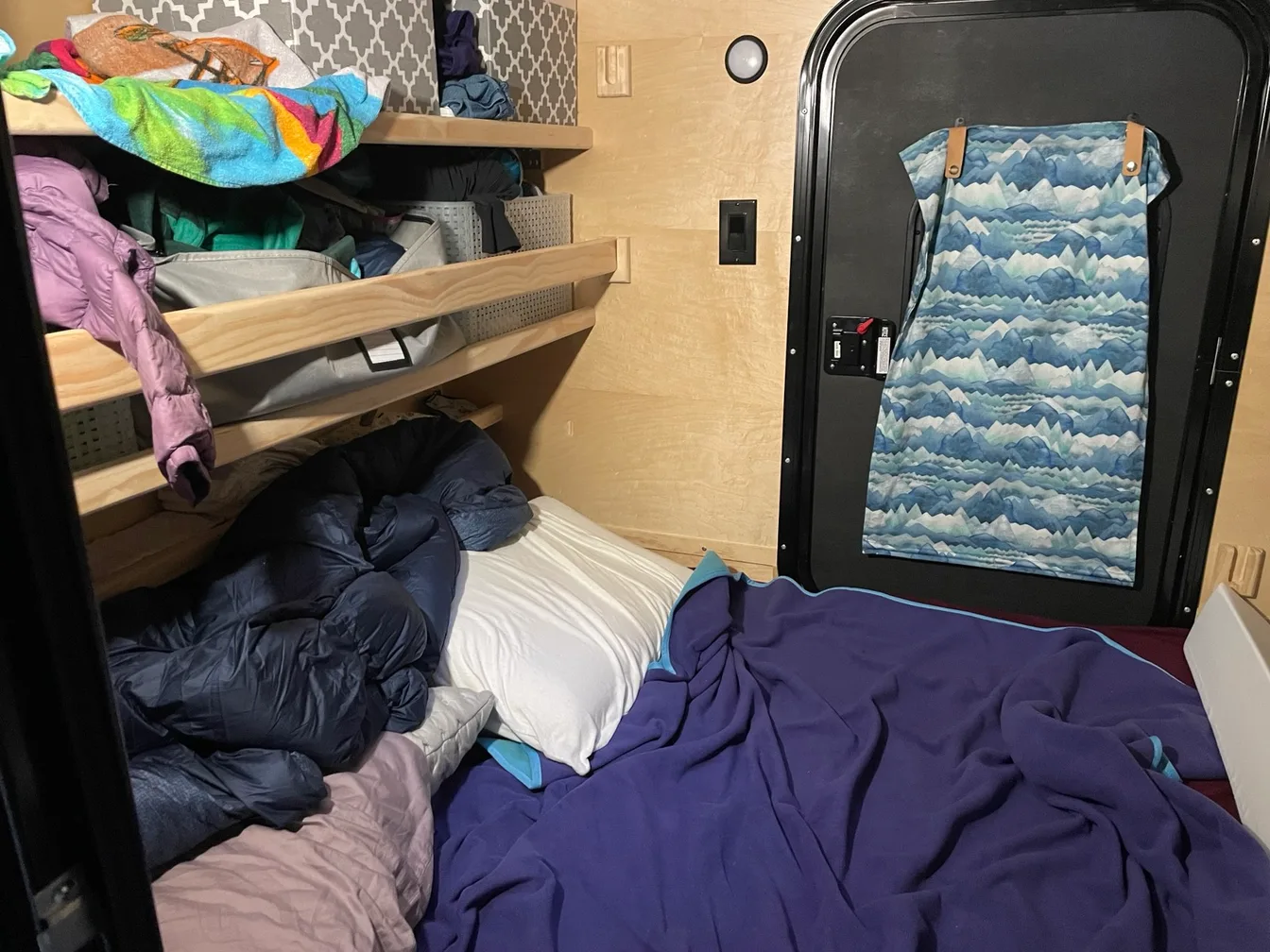
We camp in a Colorado Teardrops Mount Massive (the company has since closed, but everything here applies to any teardrop). This camper has two bunk beds and a double mattress, making it suitable for a family of four, up until the oldest reaches around age 10.
Why a teardrop trailer is different
Teardrop trailers fall somewhere between a tent and an RV. They hold in heat much better than a tent, but they don’t have enough space to have the same heating needs as RVs. They warm up fast from nothing but body heat, and they lose that heat just as fast.
Moisture, not cold air, is actually the bigger challenge when you have warm bodies inside and cold temperatures outside. Two to four people breathing all night release a surprising amount of water, and in a sealed cabin that water condenses on the cold walls and soaks your bedding and clothes.
How to heat your teardrop camper
Rather than going with a traditional heater, we have found that an electric blanket does a really nice job heating the small cabin and making the space much cozier. We use one like the Westinghouse Heated Car Blanket, a 12V electric blanket that plugs straight into the trailer’s 12V outlets. If your teardrop isn’t wired for 12V, it runs just as well off a small power station in the cabin.
We keep it extra cozy by turning the blanket on about 15 minutes before we’re ready for bed. By the time we climb in, things feel much warmer than outside. From there, you can either sleep with it on low or switch it off depending on how cold it is outside. This is much more energy efficient than using a heater and it lets you skip worrying about carbon monoxide.
If you want cabin heat anyway
If you want a true heater, two options come up again and again, and we would only use one of them.
On shore power, a small ceramic heater will also work fine. Get one with a tip-over shutoff and a thermostat, set it low, and give it clear space. A teardrop cabin reaches temperature in minutes, and we wouldn’t run it while sleeping, especially with kids in a small space.
What we won’t do is run an unvented propane heater inside. Plenty of teardrop articles recommend a portable propane-powered heater with the advice to crack the windows and bring a carbon monoxide detector. We don’t think this is worth the risk, and it may also make the in-cabin moisture problem worse. If you do bring one in anyway, a carbon monoxide detector is necessary.
Bedding: size it to the mattress
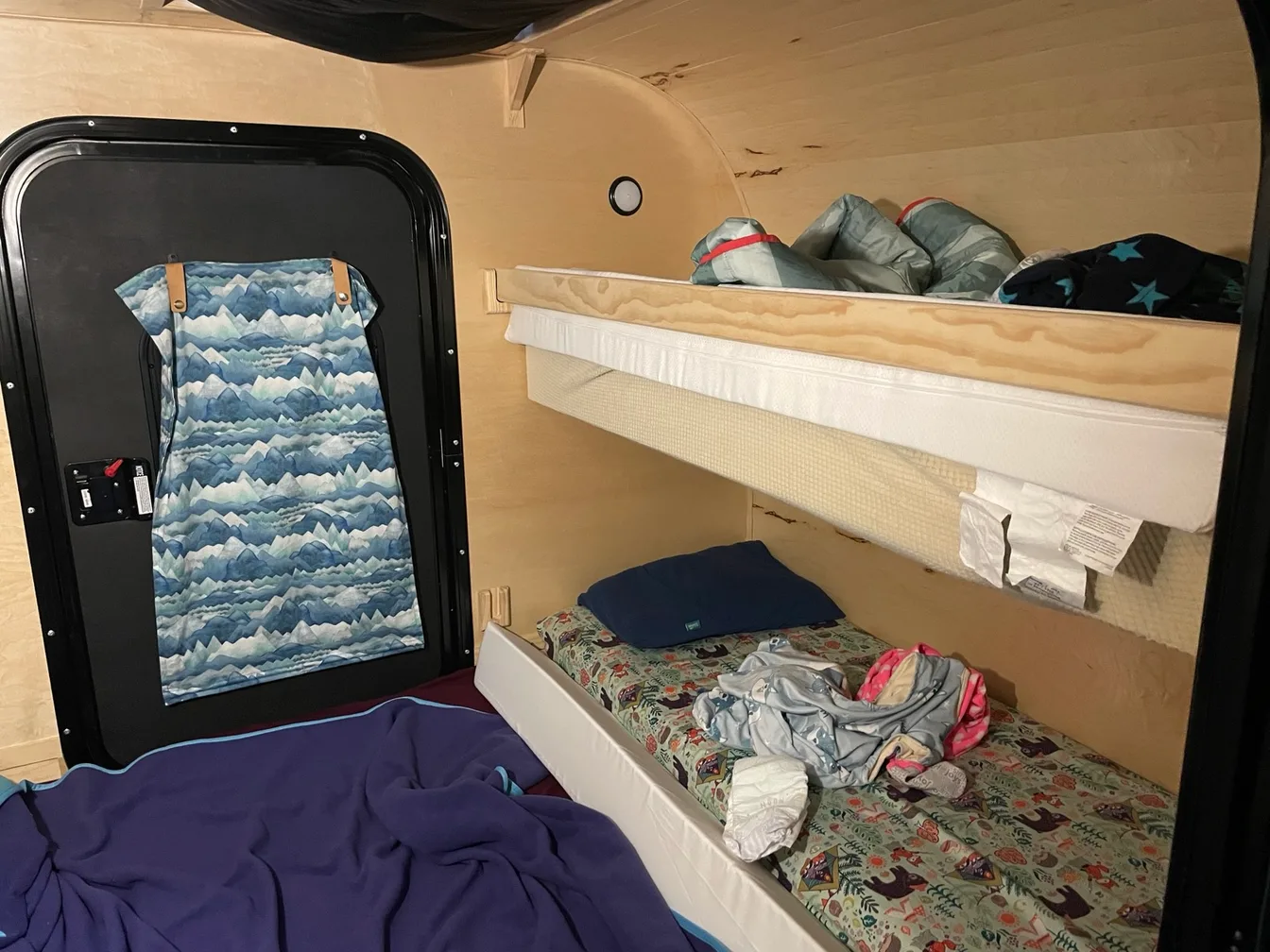
At home, you size a blanket to drape past the edges of the mattress, but in a teardrop there isn’t room for that. You want a blanket sized to the mattress (or just wider than it) so you don’t have blankets crumpling up against the walls.
We use the Therm-a-Rest Ramble Down 2-Person Hydrophobic Camping Blanket, and we really prefer it to using a traditional sleeping bag. The two-person size fits a teardrop mattress almost exactly, the down keeps it warm without the weight of a household comforter, and the hydrophobic treatment means we don’t have to worry about it getting damp. It goes in and out of stock at Amazon so you may need to check other retailers as well.
The quilt also means nobody is lying on a zipper or fighting with one at 2 a.m. If it does get too warm, you can easily stick a leg out just like at home.
One more bedding trick, visible as the purple blanket in our photos: keep a waterproof blanket spread over the bed. When it’s raining, it lets us bring the kids all the way inside in their rain-suits, peel the wet layers off on top of it, and get everyone ready for bed without the mattress paying for it. Any blanket with a waterproof backing works, just make sure you have a spot to fold it and tuck it before you lay down and arrange your pillows and blankets. We like to keep our pillows and blankets close to where our feet go until the last minute to avoid the chances of them getting wet.
Sleep with the windows cracked, even when it’s cold
It feels wrong to open a window in the cold, but a sealed teardrop with two sleepers in it will have wet walls and foggy windows by morning. Plus who doesn’t want to sleep with fresh air while camping? Cracking two windows (one on each side, so air actually moves) and the top vent if you have one lets the moisture out. This will keep you warmer, not colder, because dry bedding stays warm and damp bedding doesn’t.
We also keep an Eva-Dry Wireless Mini Dehumidifier in the cabin. It’s a renewable silica-gel unit, so it needs no power while you camp. It’s just an extra layer of defense.
In the morning, wipe down any condensation on the windows and walls with a towel before you close the trailer up for the day.